Have you ever walked along a windy beach and noticed shells sitting atop small peaks of sand, like a miniature mountain range? Does a shell “protect” the sand underneath, or does the sand pile up behind it? Does the shell actually cause more erosion around it? How does a shell affect the way sand moves along beaches? What happens when you have millions of shells along a beach? Does that affect the way the beach as a whole erodes? Now what about the parts of a beach that we can’t see, below the water?
Shells emerging from the beach on little pedestals of sand
These might seem like the thoughts of an idle beachgoer, but are actually essential to helping us understand how to sustainably protect our coasts. As part of the TRAILS project, Tjitske Kooistra is investigating how sand nourishments influence sensitive ecosystems on the Dutch coast. In order to do that, we need to understand how shells and sand interact at the bottom of the sea, since there are many locations along the Dutch coast where shells make up a significant portion of the beach material. This is really difficult to understand in the field, so to figure this out in a more controlled setting, Tjitske planned a series of lab experiments and we recruited Steven Haarbosch to carry them out.
A few weeks ago, I shared some sand that my dad brought back from the Butt of Lewis. On that same trip, he and my mom went to visit the island of Barra, where her family originated from before emigrating to eastern Canada in the 1770s.
Halfway through their holiday, I received an excited text message from my dad: “Tell me – the whole island seems like grey granite, so where does the white sand come from? (In fact all the west side beaches are white sand.) Is it coral?”
Eager for a distraction from my work, I did a quick lit review. The consensus seems that indeed, the white sand on the beaches has almost nothing to do with the gneiss found on the rest of the island. In essence, it seems as though most of the original sand was bulldozed there by glaciers during the last ice age or brought there by meltwater as they retreated. Then over the course of the past few thousand years, shell fragments have accumulated and overwhelmed the native glacial sand, making up 7.5% to 82.9% of the total sand. This results in the beautiful white beaches that you see today (Jehu & Craig, 1924; Goodenough & Merritt, 2007).

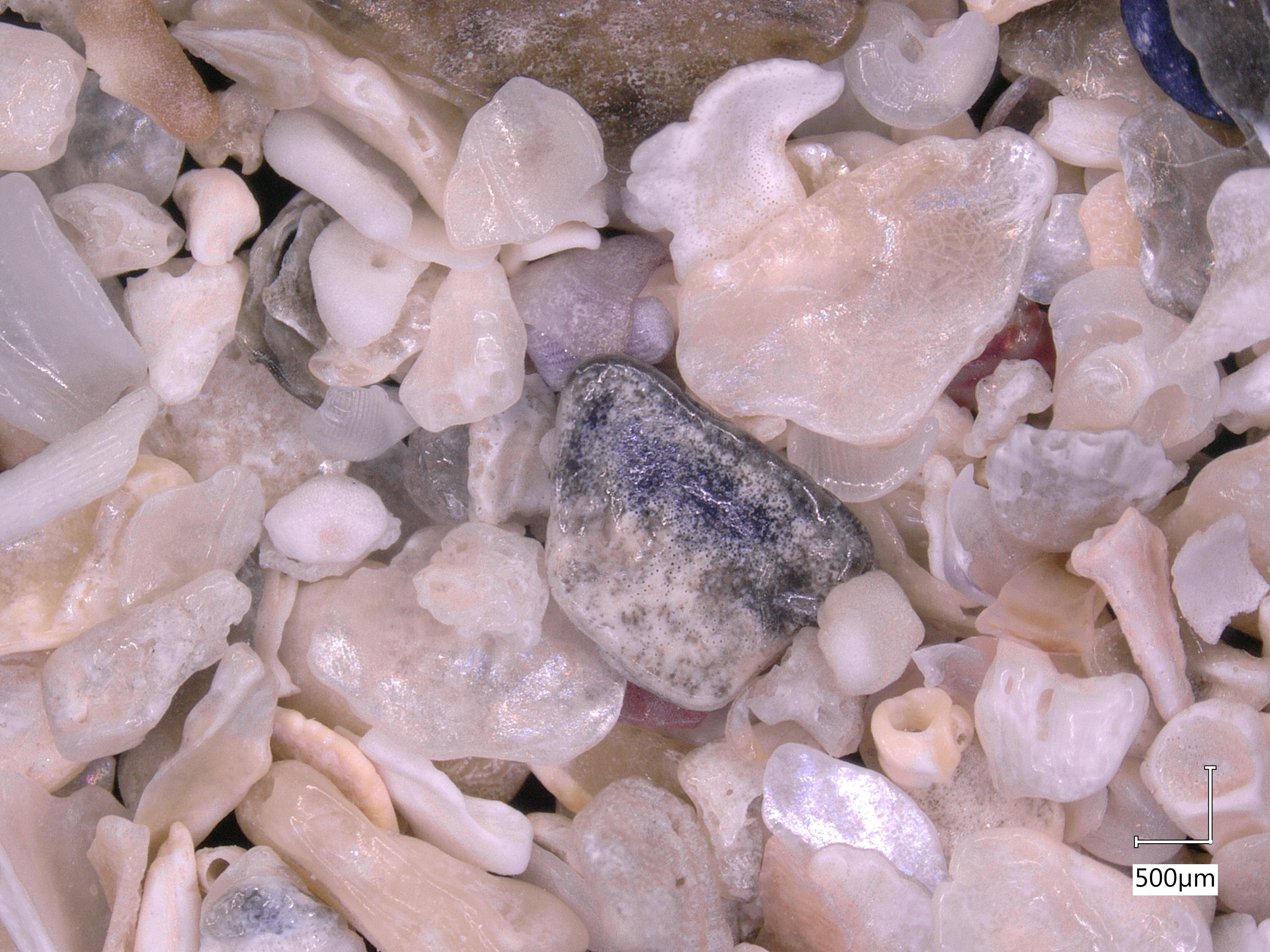
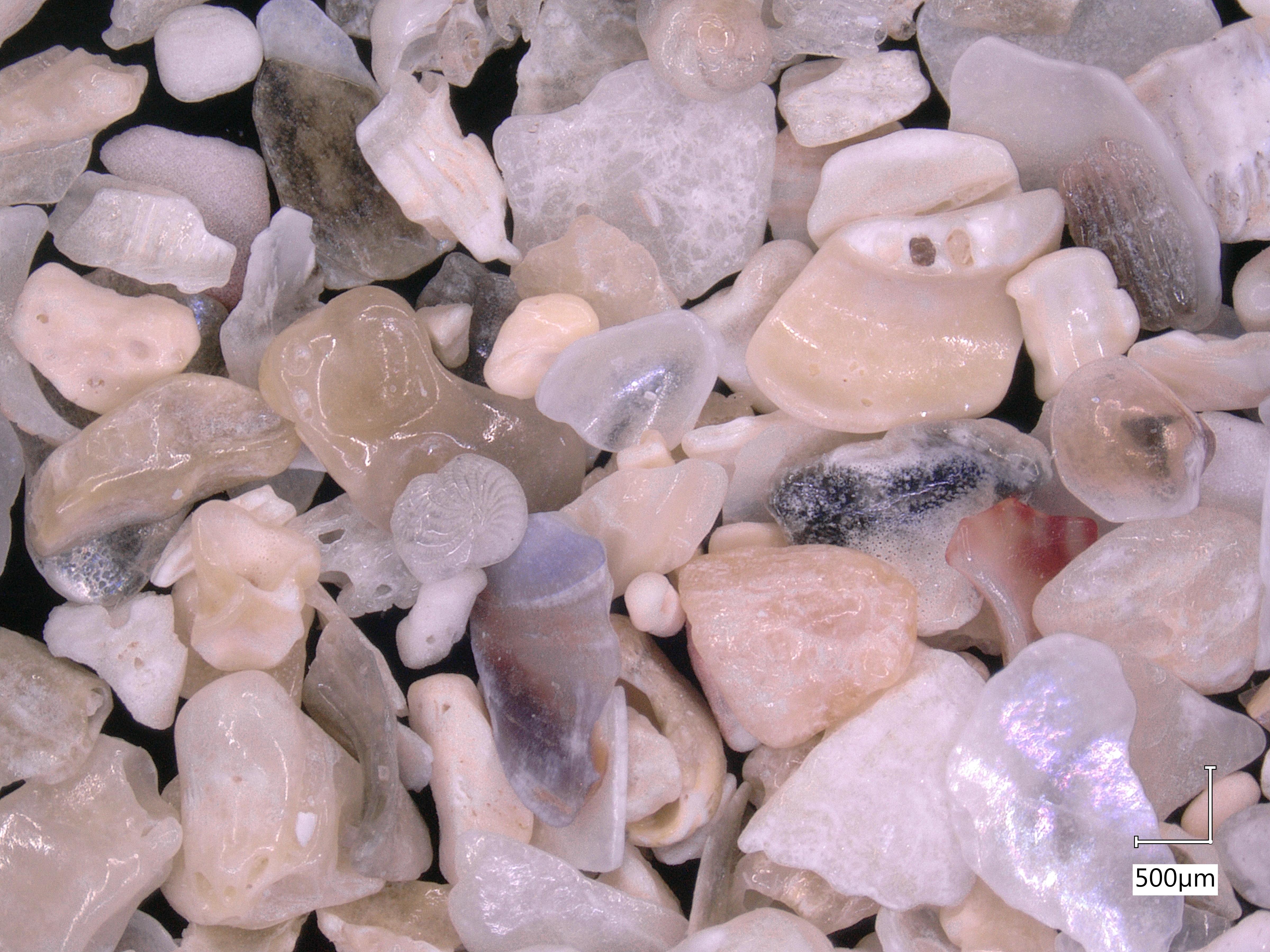
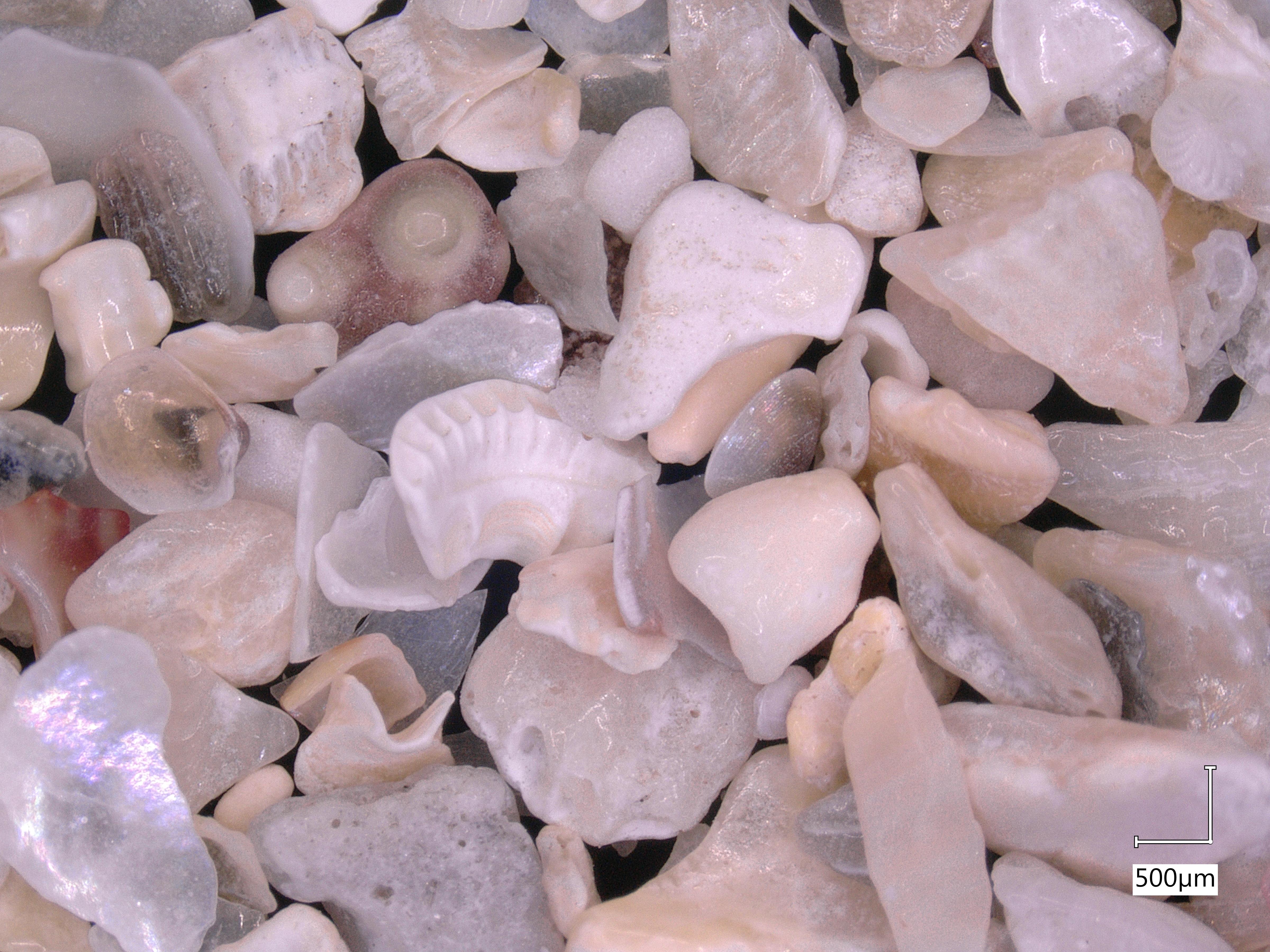
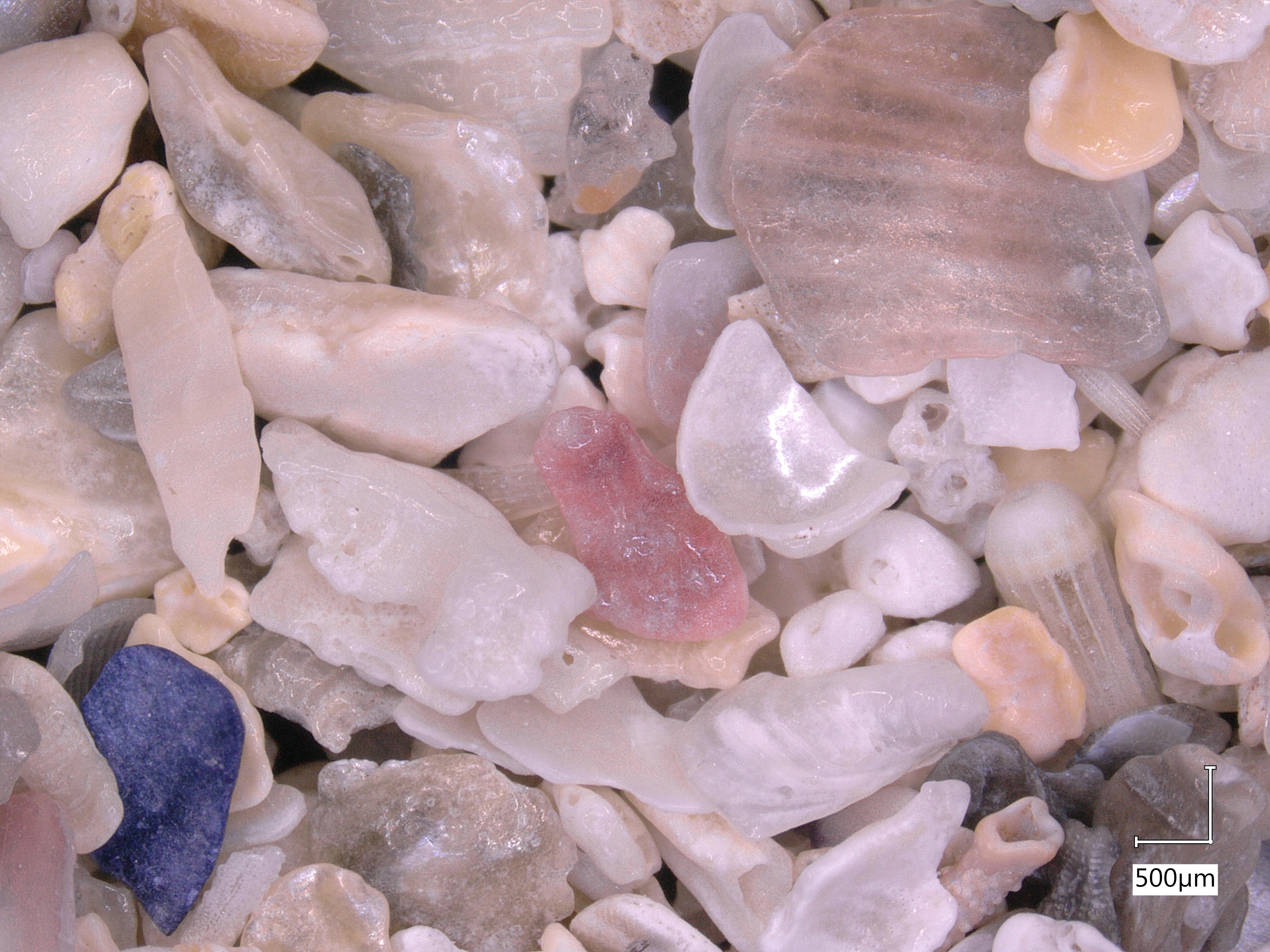
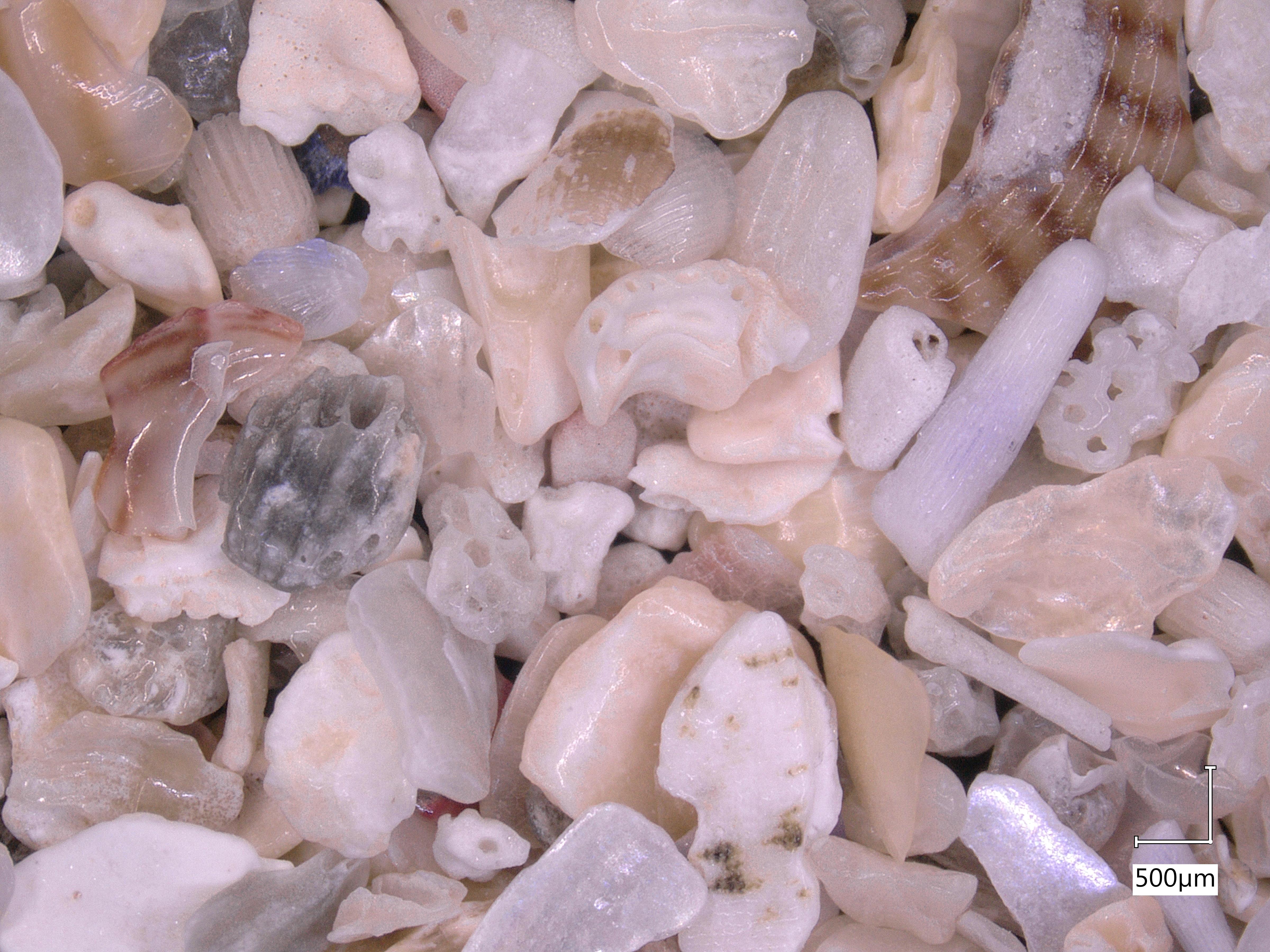
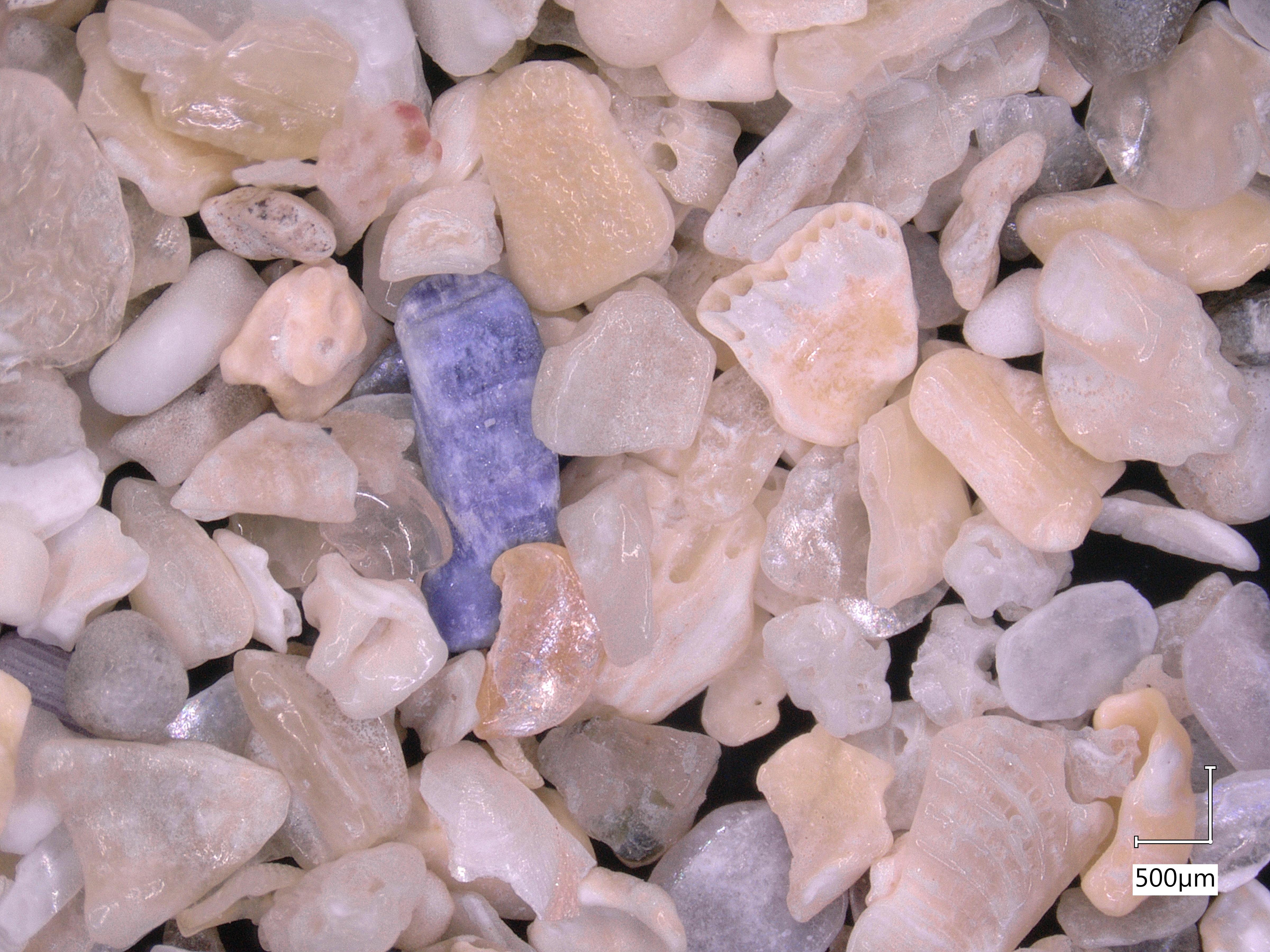
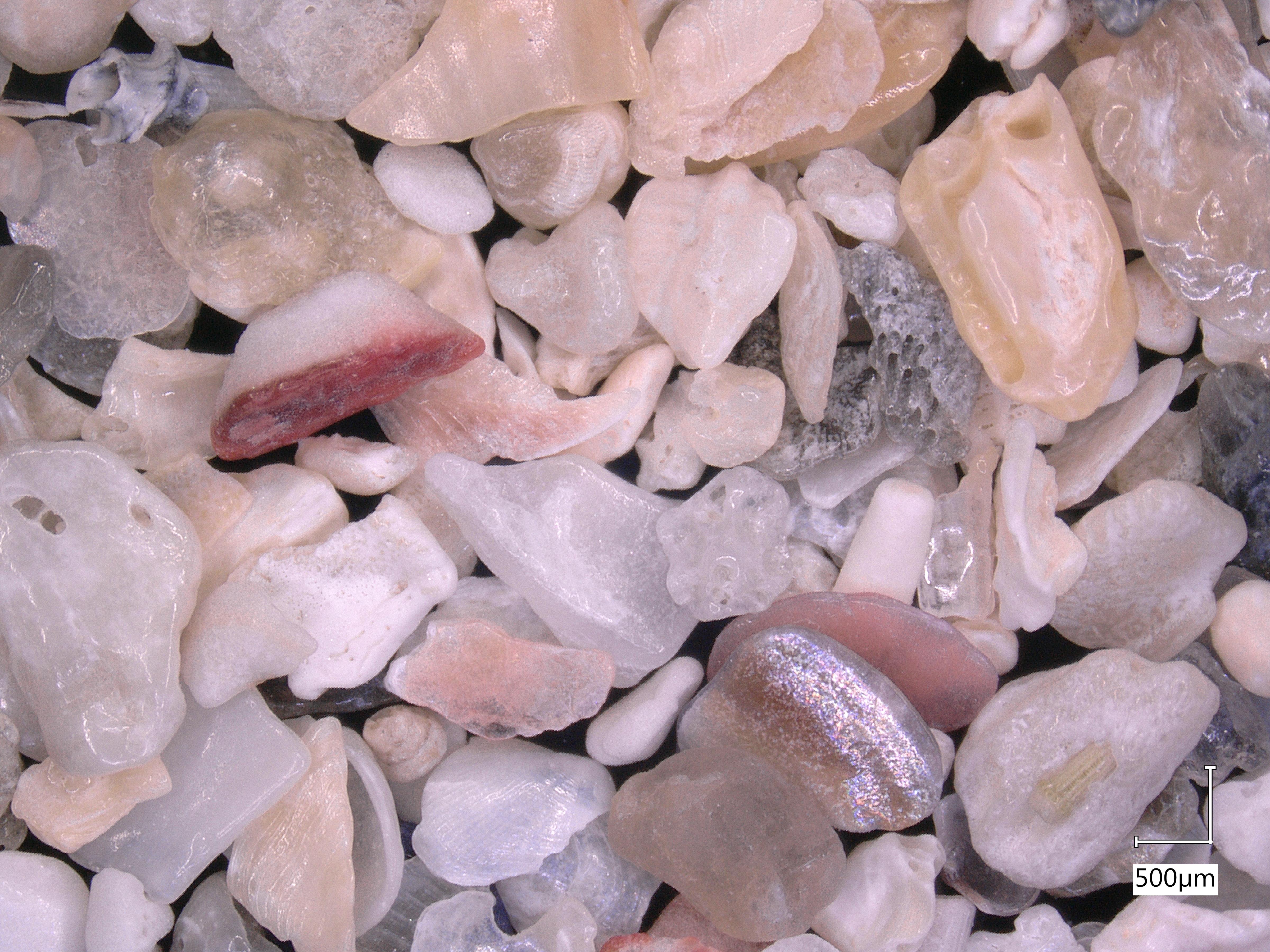
This might be my favourite sample of sand that I have analyzed yet- it is incredibly shelly, and every photo reveals beautiful new shapes and patterns. I think I will just let the sand speak for itself:
When you zoom out, it doesn’t look like much…
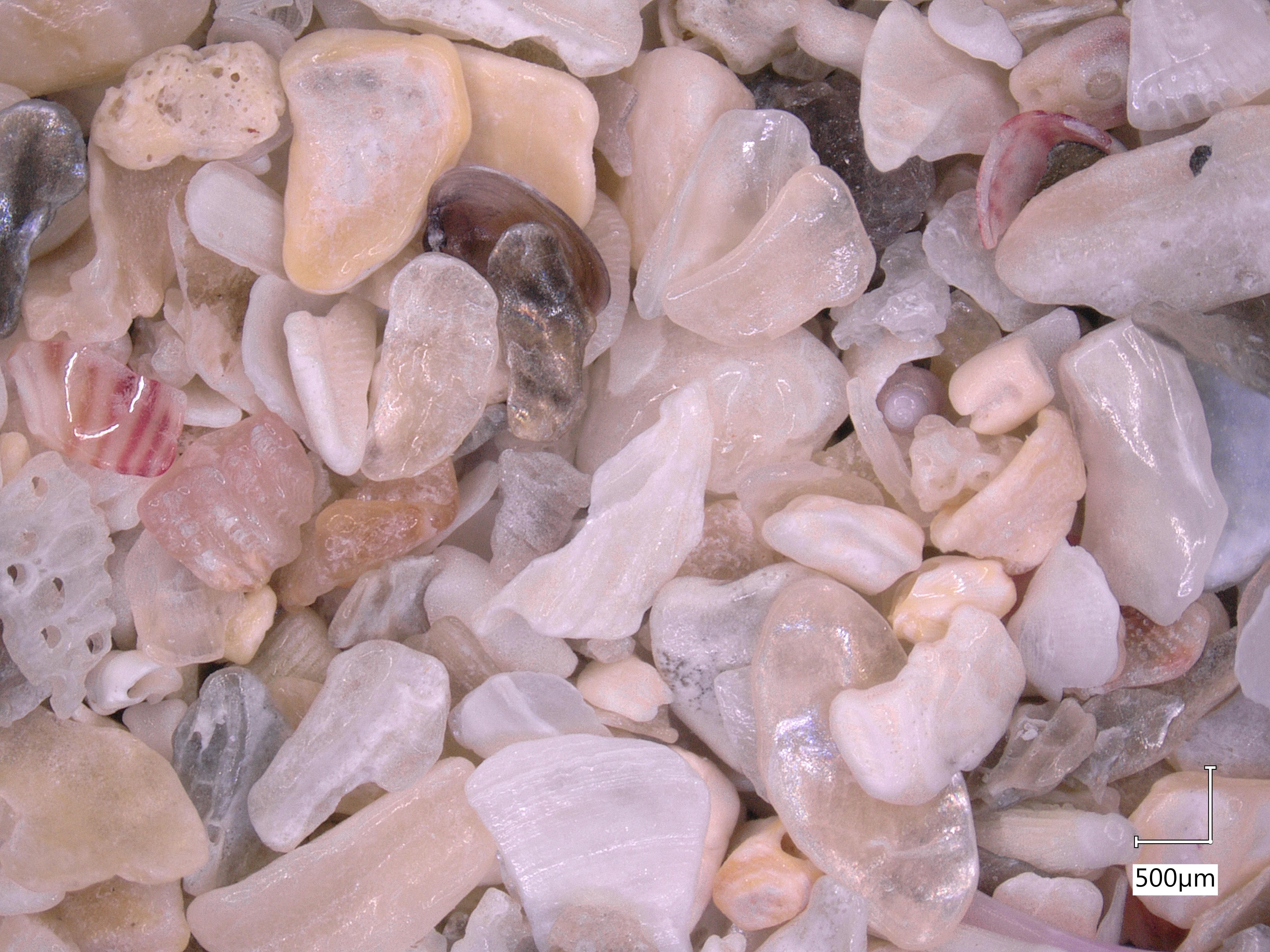
…but zooming in reveals all sorts of interesting shell fragments with different structures and colours.
I particularly love the piece in the middle of this photo: it almost looks like a piece of glazed pottery.
I’m really quite curious as to what the red and white fragment in the upper left quadrant is. It looks like a piece of octopus tentacle, although I know it can’t be!
Purple is my favourite colour, so I love the shade of the fragment in the lower left corner. It actually looks a lot like the coralline algae we saw in my photographs of sand from Archipel Glenans. I wonder if something similar is present offshore of Barra… The cylindrical fragment on the right side makes me think of a Roman column.
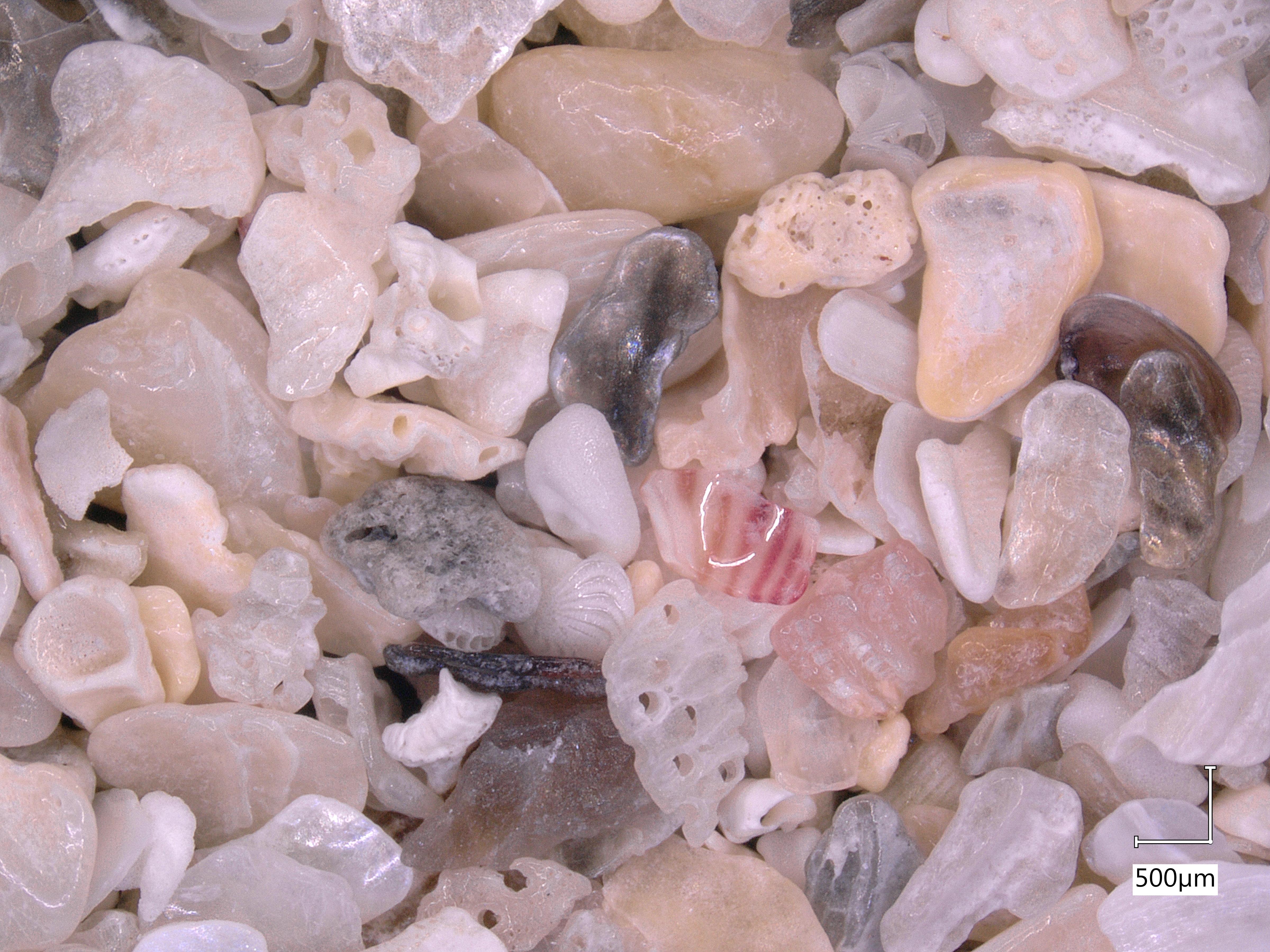
This one might be favourite- I zoomed in to 40x magnification to take a closer look. The patterns of the white bubbles are beautiful- I am very curious whether that is a shell fragment or actually some sort of igneous rock left over from Scotland’s volcanic days…
I love the iridescence of the shell at mid-right, and the vivid pink streak in the top left quadrant. So many cool shapes and colours!
I hope you enjoyed those as much as I did. I just wish I knew more about ecology so that I had a better idea of what we were actually seeing here!
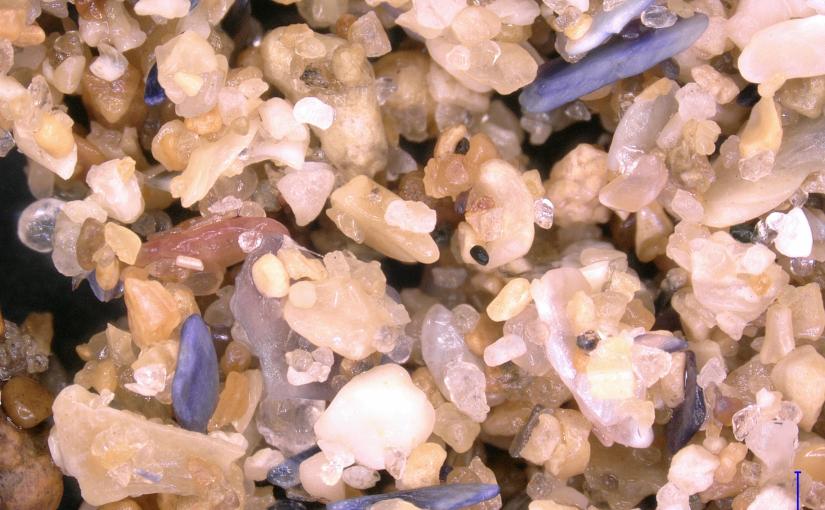
Some really cool sand that my friend Claudia brought back from France. I especially like the purple shell fragments. This image is magnified 40x from the actual size. If anyone else goes to the beach on holiday, please bring me back some sand!
Sword Beach is located on the coast of Normandy in northern France, and is also where the British landed on D-Day in World War II.






 Coastally Curious